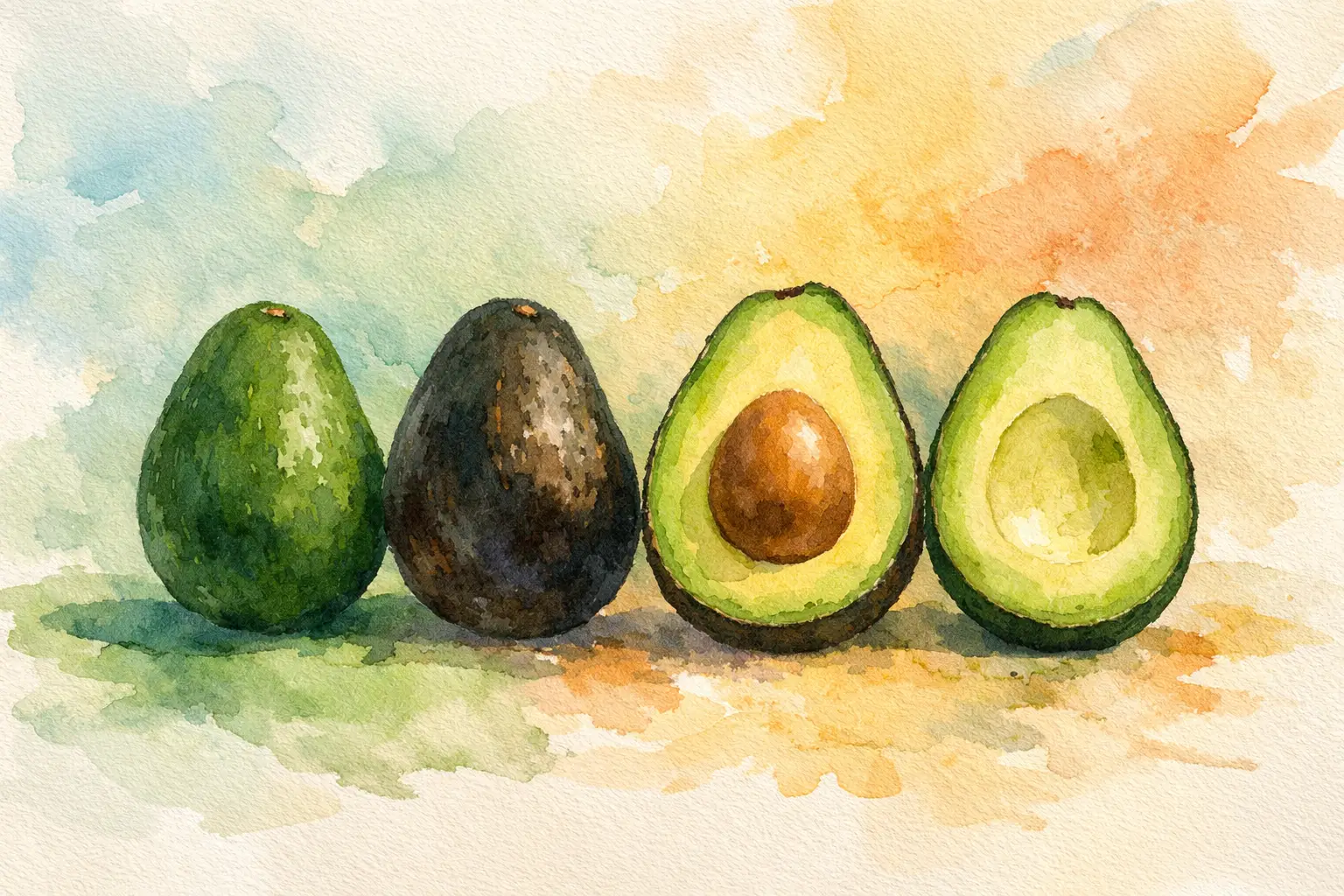
You know the moment. One avocado feels like a rock, the next turns soft overnight, and the one you cut open for lunch is somehow still not ready. A good guide to avocado ripening stages takes the guesswork out of that cycle and helps you choose the right fruit for tonight’s tacos, tomorrow’s toast, or the weekend batch of guacamole.
At our family farm, we believe better food starts with understanding it. Avocados are one of those ingredients that reward a little attention. When you know what each stage looks and feels like, you waste less, enjoy better flavor, and serve your family fruit at its peak instead of crossing your fingers at the cutting board.
Why avocado ripening can feel unpredictable
Avocados do not usually ripen on the tree the way many other fruits do. They mature there, but the real softening happens after harvest. That is why an avocado can look perfectly fine on the counter and still need several days before it is truly ready.
Temperature, handling, and variety all affect timing. A cooler kitchen slows things down. A warm room speeds them up. If fruit was refrigerated during shipping or storage, it may need time to wake back up before the ripening process gets moving again. Even within the same bag, one avocado may be ready before the others. That is normal.
The key is to stop relying on color alone. Some avocados darken as they ripen, but color is only one clue. Texture, firmness, and what you plan to make matter more.
Guide to avocado ripening stages
Think of ripeness as a progression, not a simple ready or not ready decision. Each stage has a best use, and that makes buying and storing avocados much easier.
Stage 1: Firm and freshly picked
At this stage, the avocado feels very hard with no give when you press it gently in your palm. The skin may be bright green or darker depending on the variety, but the fruit itself is not ready to eat. If you cut it open now, the flesh will be tight, less creamy, and sometimes hard to slice cleanly.
This stage is best if you want avocados to last several days on the counter. For families who like to plan meals ahead, firm fruit is useful because it gives you time. It is also the safest stage for shipping, which is one reason grove-fresh avocados can arrive in excellent shape and then ripen at home.
If your avocados are in this stage, leave them at room temperature out of direct sunlight. A paper bag can help speed things up a little, especially if you add a banana or apple, but patience usually gives the best results.
Stage 2: Breaking ripeness
This is the stage many people overlook. The avocado still feels mostly firm, but there is a slight softness starting near the stem end or along one side. It is not ready for guacamole yet, but it is moving in the right direction.
This stage is useful if you want to slice avocado for salads or grain bowls in a day or two. The flavor is developing, and the texture is starting to change from dense to buttery. If you are meal planning, this is often the sweet spot for fruit you want to hold briefly without losing control of timing.
Check daily once an avocado reaches this point. Ripening can move quickly from here, especially in a warm kitchen.
Stage 3: Ready soon
A ready-soon avocado gives slightly when pressed, but still feels structured. It should not feel mushy or sunken. The flesh inside will be closer to creamy, with good flavor and a cleaner cut than a firmer fruit.
This is often the best stage for slicing and dicing. If you want neat cubes for a cobb salad, avocado halves for a breakfast plate, or slices for sandwiches, this stage gives you control. The fruit is soft enough to enjoy but firm enough to hold its shape.
If dinner is tomorrow, you can move a ready-soon avocado into the refrigerator to slow it down. That simple step helps families manage ripeness instead of feeling rushed to use everything at once.
Stage 4: Ready today
This is the stage most people are looking for. The avocado yields to gentle pressure in your palm and feels soft without collapsing. Inside, the flesh is rich, smooth, and easy to mash. It should taste full and buttery, not watery or stringy.
This is your guacamole stage. It is also perfect for avocado toast, creamy dressings, smoothies, and anything else where texture matters. If you are serving guests or building a family meal around fresh avocados, this is the stage that delivers the experience people remember.
Use gentle pressure with the whole hand instead of poking with fingertips. Fingertips bruise fruit and can create soft spots that feel like ripeness but are really damage.
Stage 5: Very ripe
A very ripe avocado feels quite soft and may have deeper give in several areas. It can still be delicious, but the window is narrowing. This fruit is usually best used the same day.
For mashed uses, very ripe can be just right. If you are making guacamole, blending avocado into a sauce, or stirring it into eggs, this stage still has value. For clean slices or pretty presentation, it may be too soft.
You may also notice that the stem cap comes off more easily now. That can be a useful clue, but it should support your firmness check, not replace it.
Stage 6: Overripe
An overripe avocado often feels mushy, has sunken spots, or gives off a fermented smell when cut. Inside, the flesh may show brown streaks, gray patches, or an uneven texture. One or two small brown spots can be trimmed away, but widespread discoloration usually means the best eating quality has passed.
This stage happens to everyone once in a while. The lesson is not to swear off avocados. It is to catch the fruit one day earlier and refrigerate it when it reaches the stage you want.
How to tell ripeness the right way
The simplest method is gentle pressure in the palm of your hand. Hard means not ready. Slight give means getting close. Soft, even give means ready. Mushy or collapsing means too far gone.
You can also check under the small stem cap if it is loose enough to lift without force. If it is green underneath, the avocado is usually in good shape. If it is brown, it may be overripe. If the cap does not come off easily, leave it alone. Forcing it can damage the fruit and does not speed anything up.
Color can help, but it depends on the variety. Some avocados darken dramatically. Others stay greener even as they soften. That is why firmness matters most.
How to manage ripening at home
Countertop ripening works best for firm fruit. Keep avocados at room temperature and check them once a day. If you need to speed things up, place them in a paper bag. That traps natural ethylene gas and helps the process move along.
Once the avocado reaches your preferred stage, refrigerate it. Cold storage does not stop ripening forever, but it slows it enough to give you breathing room. For busy households, that can be the difference between a well-timed lunch and wasted produce.
If you cut an avocado and only use half, leave the pit in the unused half if possible, brush the surface with lemon or lime juice, and store it tightly covered in the refrigerator. It may still brown a little on top, but the flesh underneath is often perfectly good.
Matching ripeness to the meal
The best avocado is not always the softest one. It depends on what you are making. Firmer fruit works better for slices, cubes, and meals where presentation matters. Softer fruit shines in spreads, dips, and recipes where that creamy texture carries the dish.
That is why a little ripeness range at home is helpful. One avocado ready now, one ready tomorrow, one still firm for later in the week. It is a simple rhythm, but it makes healthy meals easier to pull together without a last-minute store run.
For families trying to eat well more consistently, this matters. A good avocado on the counter is one of those small ingredients that turns eggs into breakfast, a sandwich into a better lunch, or taco night into something everyone gathers around.
A better avocado experience starts with timing
When avocados are grown with care and picked for quality, ripening becomes more predictable. That does not mean every piece of fruit behaves exactly the same. Nature still has a say. But it does mean you can count on better flavor, better texture, and a better chance of catching that perfect window.
If there is one habit worth keeping, it is this: check your avocados daily and use them with intention. A little attention turns a good ingredient into a dependable one, and that is how healthy food becomes part of everyday family life.
Leave a Reply