You can bring home beautiful avocados and still end up with disappointment a day later. One turns hard as a rock, another goes mushy overnight, and the one you planned for taco night browns before dinner. Knowing how to store fresh avocados makes the difference between wasted fruit and the kind of steady, reliable ripeness that helps you feed your family well.
At our table, avocados are more than a trend food. They are part of simple, nourishing meals that keep busy households going – sliced onto toast in the morning, added to salads at lunch, and mashed into guacamole for family dinners. When you understand how avocados ripen and what storage method fits each stage, you get better flavor, better texture, and a lot less waste.
How to store fresh avocados at each stage
The biggest mistake people make is storing every avocado the same way. Fresh avocados need different handling depending on whether they are hard and unripe, ready to eat, or already cut open.
If an avocado feels firm and does not give when you press it gently, it is still ripening. That avocado should usually stay on the counter at room temperature. A paper bag can help speed the process, especially if you place an apple or banana nearby, because those fruits release ethylene gas that encourages ripening. If you are not in a hurry, just leave the avocado in a bowl away from direct sunlight and let nature do the work.
Once the avocado yields slightly to gentle pressure, it is ready or very close. At that point, the refrigerator becomes your best friend. Cold temperatures slow down ripening, which buys you extra time – often a couple of days – before the fruit crosses into overripe territory.
If the avocado has already been cut, storage becomes less about ripening and more about protecting the flesh from air. Exposure to oxygen causes browning quickly, so your goal is to minimize contact with air and keep the fruit cold.
Storing unripe avocados on the counter
For hard avocados, room temperature is usually the right call. A kitchen counter or pantry works well as long as the fruit is kept out of direct sun and away from a hot stove or window. Too much heat can make avocados ripen unevenly, which often means soft spots forming before the center is ready.
Most unripe avocados will take a few days to soften, though timing depends on how mature they were when picked. Some may be ready in two days, while others need four or five. That is normal. Avocados are one of those foods that reward patience.
If you want to speed things up, place them in a paper bag. The bag traps natural gases and encourages faster ripening. Avoid plastic bags for this stage because they can hold too much moisture and create a less balanced environment. You want a gentle push toward ripeness, not a damp setup that invites spoilage.
There is a trade-off here. Faster ripening can be useful when you need avocados for a specific meal, but slower ripening often gives you a wider window to use them. If you are planning meals for the week, it can help to leave some avocados out and refrigerate any that are already nearly ready.
When to refrigerate fresh avocados
A ripe avocado should feel slightly soft but not squishy. When you press near the stem end with gentle pressure, it should give a little. That is your signal to move it to the fridge if you are not eating it right away.
Refrigeration slows the fruit down. This is especially helpful for families who want to spread out use over a few days instead of feeling like every avocado needs to be eaten tonight. If you bought several at once, storing the ripe ones in the fridge while the firmer ones stay out on the counter helps you manage them in stages.
If an avocado is already overripe, though, the refrigerator will not rescue it. Cold storage can slow further decline, but it cannot bring back a creamy texture once the flesh has started turning stringy, watery, or heavily bruised. Timing matters.
One simple habit helps a lot here: check your avocados once a day. That quick look and gentle press can save you from missing the sweet spot.
How to store cut avocados without losing quality
Cut avocados are where things get tricky. The green flesh starts to brown once exposed to air, and while browning does not always mean the fruit is unsafe, it does affect appearance and flavor.
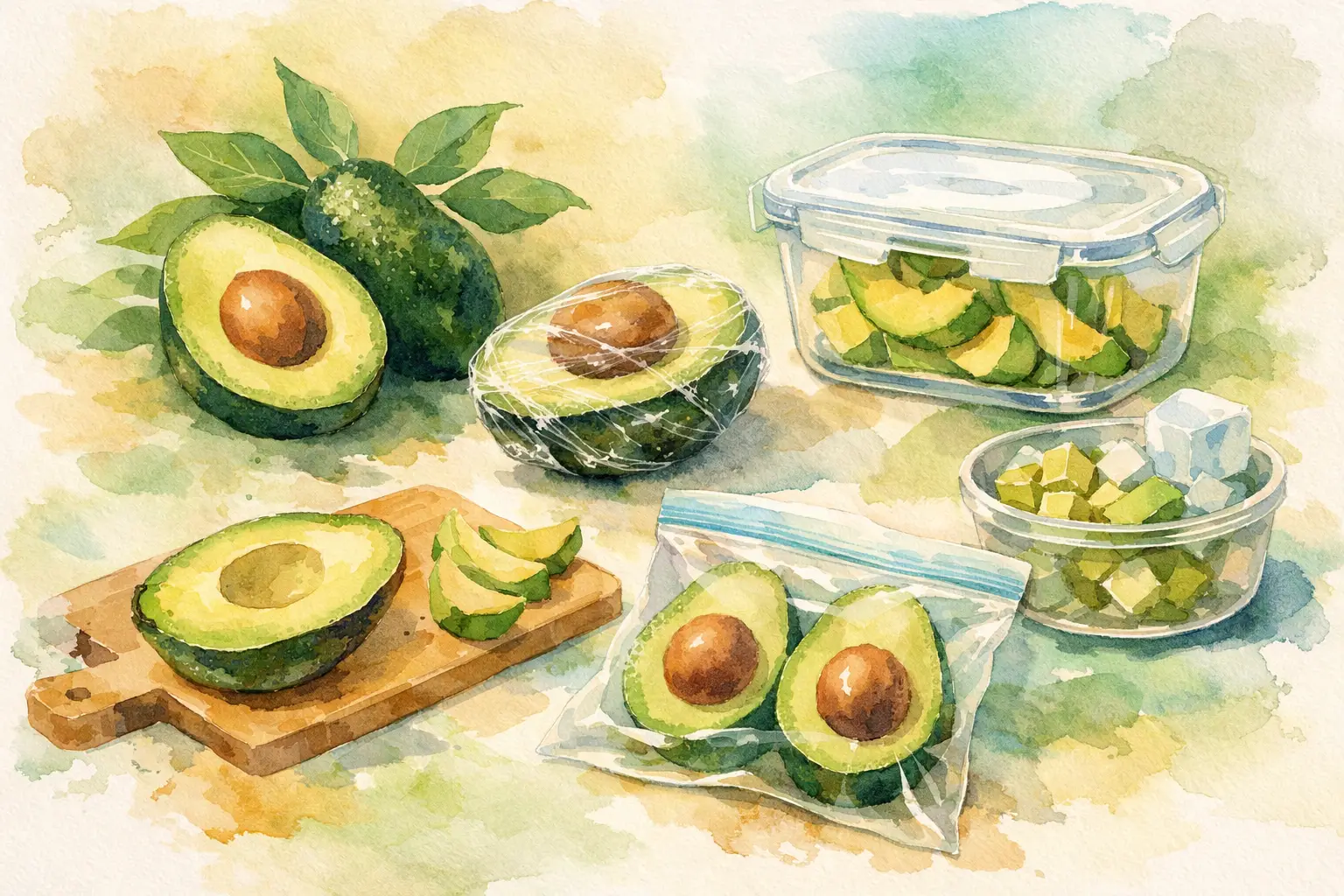
To store half an avocado, keep the pit in if possible. The pit protects the flesh directly underneath it, though it does not preserve the whole surface on its own. What really helps is pressing plastic wrap tightly against the exposed flesh so there is as little air as possible. Then place the wrapped avocado in an airtight container and refrigerate it.
A small amount of lemon or lime juice can also help. The acid slows browning and works especially well if you plan to use the avocado in a salad, sandwich, or mash where a little citrus flavor fits naturally. If you are saving it for something more neutral, use a lighter touch so the fruit still tastes like itself.
Some people store cut avocados with sliced onion in an airtight container. This can help reduce browning, but it may transfer flavor. For some dishes, that is no problem. For others, especially breakfast or smoothies, it may not be what you want.
The best answer is practical, not perfect: protect the flesh from air, keep it cold, and use it soon. A cut avocado is best eaten within a day or two.
Can you freeze avocados?
Yes, but it depends on how you plan to use them. Freezing changes the texture, so thawed avocado will not have the same clean, creamy bite you want for slices or cubes on a salad. It can still work very well in guacamole, spreads, dressings, and smoothies.
If you want to freeze avocado, mash the flesh with a little lemon or lime juice first. Store it in a freezer-safe airtight container or bag with as much air removed as possible. Label it and freeze it flat if you can, which makes it easier to thaw later.
This is a good option when you have several ripe avocados at once and know you will not get through them in time. It is not the best method for preserving that just-cut, fresh-from-the-grove eating experience, but it is far better than letting good fruit go to waste.
What not to do when storing avocados
A few common habits shorten avocado life faster than people realize. One is refrigerating hard, unripe avocados too early. They may still ripen eventually, but the process slows so much that flavor and texture can suffer.
Another is leaving ripe avocados on the counter because they still look fine. Once ripe, they can move quickly from perfect to past their prime. The kitchen can be warm, and avocados do not wait around.
It also helps to avoid storing bruised avocados under heavier produce or crowding them into a bowl where they knock against each other. Gentle handling matters. Fresh produce is not indestructible, and avocados especially benefit from a little care.
Finally, be careful with food storage hacks that promise miracles. Water baths, overly damp containers, or loosely wrapped halves can create more problems than they solve. Simple methods usually work best.
How to tell if an avocado is still good
Good storage helps, but you still need to know when an avocado is worth eating. A ripe avocado should smell mild, feel slightly soft, and have flesh that is green to pale yellow inside. A few brown streaks are not always a deal breaker – you can often cut around them.
If the fruit smells sour, feels extremely sunken, or has widespread dark, stringy, or slimy flesh, it is time to toss it. The same goes for mold or any off smell once cut open. Trust your senses.
There is also a middle ground that many home cooks overlook. An avocado that is too soft for neat slices may still be perfect for mashed toast, guacamole, or a dressing. Sometimes using fruit according to its stage is just as important as storing it well.
A better rhythm for avocado storage
The easiest way to keep avocados at their best is to think ahead by a day or two. Let firm avocados ripen on the counter. Move ripe ones to the refrigerator. Wrap cut ones tightly and use them soon. Freeze extras only when texture matters less than convenience.
That rhythm makes healthy meals easier to pull together without last-minute waste. It also lets you enjoy avocados the way they are meant to be enjoyed – rich, fresh, and ready when your family is. From Grove to Table, a little attention goes a long way, and the reward is simple food that tastes the way fresh food should.
Leave a Reply