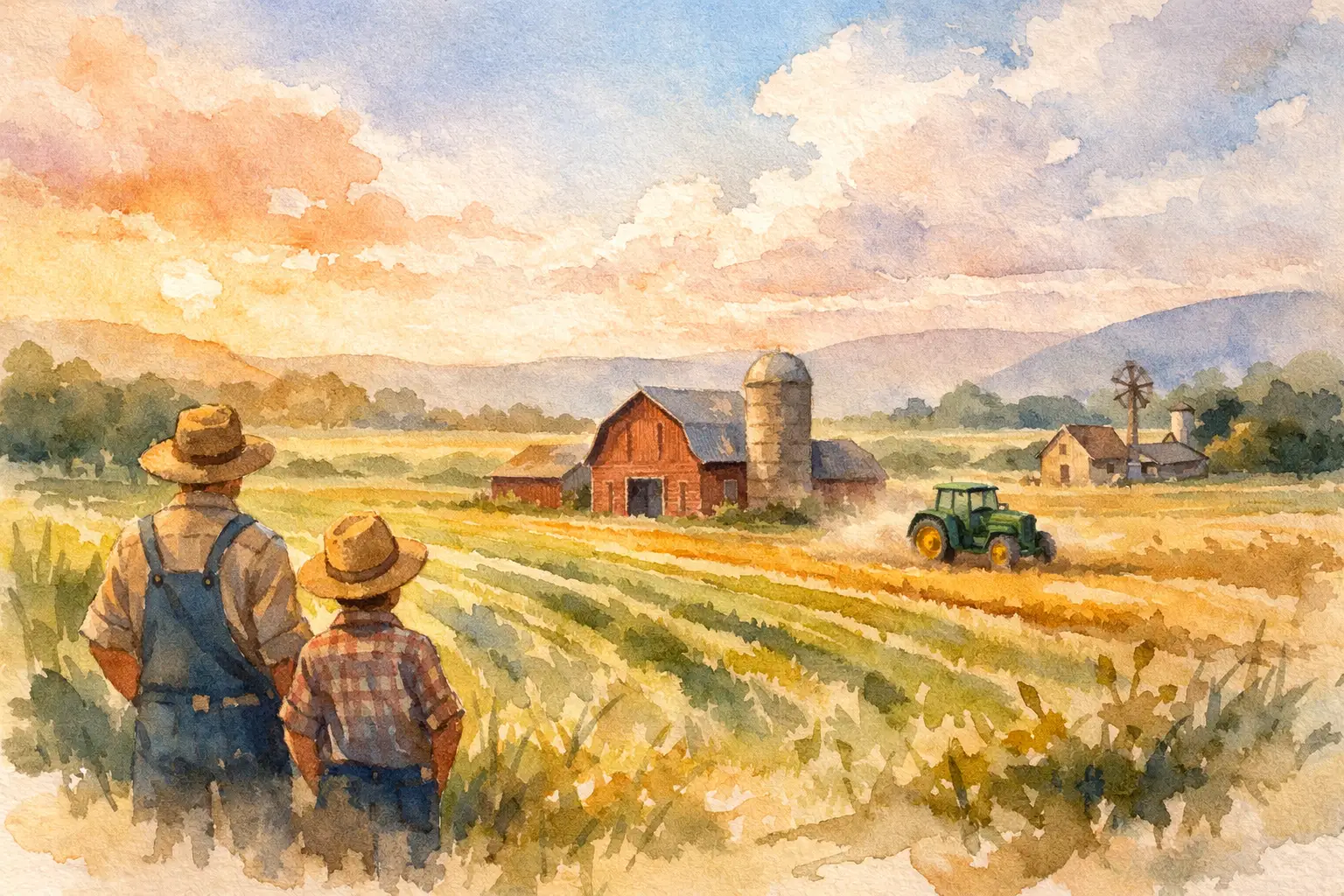
A ripe avocado on the kitchen counter may look simple, but the care behind it is anything but ordinary. Our second generation farming story begins with a family belief that good food should be grown with patience, handled with pride, and shared with the people we love. That belief still guides every season in our California grove.
For families who want to know where their food comes from, farming is more than a label on a box. It is the daily work of paying attention: to the trees, the soil, the weather, and the moment each piece of fruit is ready to be picked. It is also a promise that the food on your table was raised by people who believe your family deserves their best.
A Second Generation Farming Story Is a Living Responsibility
A family farm legacy is not something kept in a photo album. It shows up before sunrise, when there is work to do regardless of the forecast. It appears in the choices made between seasons, from caring for the grove to deciding when fruit has reached the quality worth sending to a customer.
The first generation builds the foundation. They learn the land through trial, hard work, and years that do not always go as planned. The second generation inherits that knowledge, but also the responsibility to carry it forward with fresh energy and respect.
That is the part of a second generation farming story that matters most to us. Continuing a legacy does not mean doing everything exactly as it was done before. It means holding onto what is proven – care for the land, pride in the harvest, and respect for the customer – while finding better ways to bring farm-fresh food to modern families.
For an avocado grower, that work has a very real outcome. It means fruit that is allowed to develop on the tree, harvested with intention, and sent from grove to table with freshness in mind. It means understanding that an avocado is not merely an ingredient. For a parent packing lunch, a home cook making a quick dinner, or a family gathering around weekend brunch, it can be a small and nourishing part of everyday life.
What Family Farming Changes About Your Avocados
Not every avocado reaches your kitchen by the same path. In a long, anonymous supply chain, fruit may change hands repeatedly before it arrives at a store. That system can serve a purpose, especially when shoppers need broad, year-round availability. But it can also create distance between the grower and the family eating the fruit.
Direct-from-the-grove farming creates a different connection. When growers are closer to the people they serve, quality is personal. There is a name, a family, and a standard behind each shipment. At Holmes Grown USA, we believe that accountability makes a difference you can taste.
Freshness begins before the package is ever prepared. It starts in the grove, with healthy trees and a close eye on the harvest. Timing matters because avocados need the right balance of maturity and careful handling to ripen well at home. Pick too early, and the eating experience may disappoint. Wait too long, and the window for enjoying the fruit can become narrow.
There is no shortcut that replaces attentive growing. Nature has its own calendar, and a seasonal farm must work with it rather than against it. That can mean availability changes throughout the year. For customers accustomed to seeing every kind of produce on every shelf at all times, seasonal ordering requires a little planning. In return, it offers something valuable: fruit connected to a real harvest and a real place.
The Difference Is Care You Can Feel
The best avocado moments are usually the simplest ones. A creamy slice beside scrambled eggs. A bright, homemade guacamole at a family cookout. A mashed avocado spread over warm toast before a busy school morning. When the fruit is fresh and ripens properly, it needs very little help to shine.
That is why quality cannot be separated from the growing story. A beautiful avocado should feel like an easy choice for your kitchen: rich, satisfying, and ready to support the meals you already make. It brings naturally good fats and a smooth texture to salads, sandwiches, grain bowls, and family favorites without requiring complicated preparation.
Still, no farm can honestly promise that every avocado will ripen on the exact same day. Avocados are living fruit, not factory-made products. Home temperature, storage, and the individual fruit itself all affect ripening. The goal is not perfection in a plastic sense. The goal is a better experience, built around carefully grown fruit and practical guidance for enjoying it at its best.
Growing Healthy Families Starts in the Grove
Health ownership often begins with ordinary decisions: choosing ingredients with fewer mysteries, making meals at home more often, and keeping wholesome foods within reach. Avocados fit naturally into that rhythm because they are versatile enough for breakfast, lunch, dinner, and snacks.
For busy households, versatility matters. A nutrient-dense ingredient is only helpful if it is realistic to use. Avocados can add substance to a turkey sandwich, make a weeknight taco night feel more satisfying, or turn leftover vegetables into a filling lunch bowl. They can also be the centerpiece of a fresh dip that gets everyone gathered around the table.
The farm’s role is to make that choice feel trustworthy. We cannot make dinner for you, and we would never suggest that one food defines a healthy lifestyle. Family wellness is shaped by many choices over time. But we can grow fruit with care, share it directly, and help make wholesome eating feel more enjoyable.
There is something meaningful about knowing that your food supports both your own household and another family’s ability to keep farming. When you choose American-grown produce from a family farm, your purchase reaches beyond a single meal. It helps preserve agricultural knowledge, rural work, and a way of growing that values stewardship over shortcuts.
Stewardship Means Thinking Beyond This Harvest
Farming asks people to think long-term. A grower cannot focus only on what will sell this week. Healthy groves depend on decisions that protect the land’s ability to produce for years ahead. Water use, soil health, tree care, and responsible harvesting all belong to the same bigger picture.
Sustainable growing is sometimes presented as a simple badge, but the real work is more practical and ongoing. It means observing what the grove needs, avoiding waste where possible, and treating the farm as something entrusted to your care. Every region has different conditions, and every season brings its own challenges. Responsible farming is not one fixed formula. It is a commitment to keep learning and making thoughtful choices.
That long view is especially personal for a second-generation family farm. The trees are not just this year’s crop. They represent years of labor from those who came before and possibility for those who come next. Protecting that future is part of honoring the past.
Why the Story Behind Food Belongs at the Table
People are right to ask more questions about their food. Who grew it? How fresh is it? Was it handled with care? Does purchasing it support the kind of food system they want to see more of? Those questions are not a trend. They are a practical expression of caring for the people around your table.
The answer will not always be the same for every household. Budget, access, seasonality, and personal needs all matter. But whenever you have the option to choose food with a clear origin, that knowledge can make an everyday purchase feel more connected.
Our family has learned that trust is earned harvest by harvest. It is earned by respecting the fruit, telling the truth about the realities of farming, and staying close to the customers who invite our avocados into their homes. From grove to table, that relationship is what makes the work worthwhile.
The next time you cut into a perfectly ripe avocado, take a moment to enjoy what it represents: patient growing, family commitment, and one simple way to bring more goodness to the meals you share.
Leave a Reply