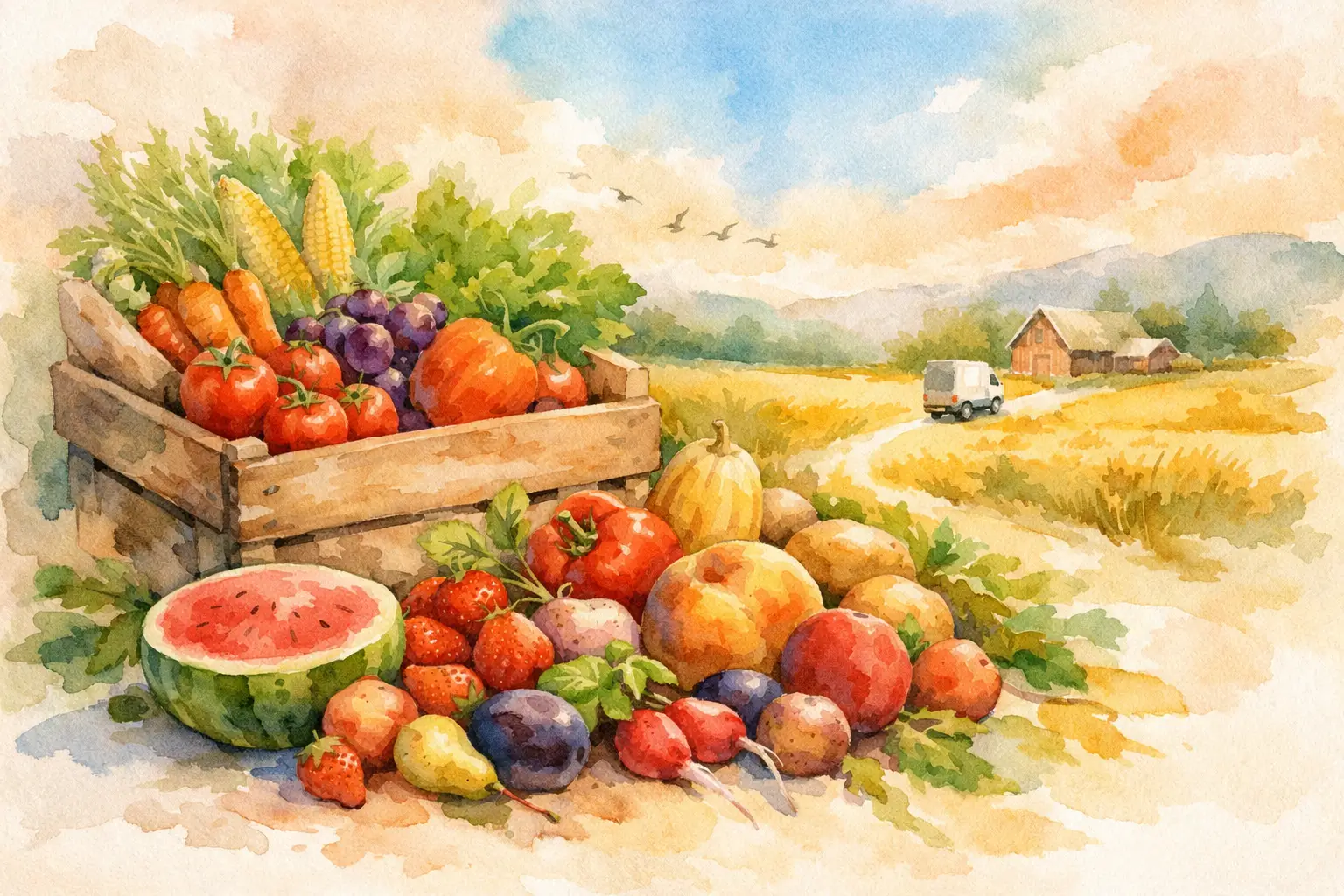
You can taste the difference when fruit is picked in its proper season. The texture is better, the flavor is fuller, and the food on your table feels less like a grocery transaction and more like what it should be – real nourishment. That is the heart of seasonal produce delivery. It gives families a way to buy food closer to its natural harvest window, when produce is more likely to arrive fresh, flavorful, and ready to enjoy.
For many households, produce shopping has become routine but disconnected. You see a pile of fruit or vegetables under bright store lights, but you do not always know when it was picked, how long it traveled, or whether it was chosen for taste or simply for shelf life. Seasonal delivery changes that relationship. It brings the timing of the farm back into the food itself, and that matters more than many people realize.
What seasonal produce delivery really means
Seasonal produce delivery is not just a box of fruits and vegetables sent to your door. At its best, it means produce is offered when it is naturally ready, harvested with better timing, and shipped with freshness in mind. Instead of forcing year-round availability at any cost, this model respects the calendar, the crop, and the customer.
That does not mean every item is picked the same day it ships or that seasonality guarantees perfection. Farming still depends on weather, soil, labor, and timing. But when produce is sold in season, the odds improve. Food usually spends less time in storage, needs fewer compromises for long-distance handling, and arrives with more of the qualities families actually care about – taste, texture, and dependable ripeness.
This is especially meaningful for produce that can disappoint when picked too early or held too long. Avocados are a perfect example. Anyone who has sliced into a watery, hard, or bruised avocado knows that convenience means very little if the fruit is not right. Seasonality helps narrow that gap between what was grown and what shows up in your kitchen.
Why flavor improves with seasonal produce delivery
The biggest reason people come back to seasonal food is simple. It tastes better.
Produce harvested in season is often allowed to develop more naturally before it is picked. That can mean better sugar development in fruit, better texture in vegetables, and a more balanced flavor overall. When food is grown and shipped according to its natural cycle rather than a constant demand for uniform supply, there is less pressure to prioritize appearance over eating quality.
That does not mean every seasonal item will be sweeter or larger. Nature is not that predictable. A cool stretch or a dry spell can affect a harvest. But those natural variations are part of real food, and most families would rather have produce with character than produce bred to survive a long supply chain but deliver very little flavor.
Seasonal delivery also shortens the emotional distance between the farm and the table. When you know a crop is available because it is truly in season, it feels intentional. Meals become more connected to the time of year. That may sound small, but it changes how people cook, shop, and feed their families.
Freshness is not just a buzzword
Freshness gets used so often that it can lose meaning. In produce, freshness is about time, handling, and condition when food arrives.
A seasonal produce delivery program often works better because it is built around harvest timing. The product is not simply sitting in a broad, year-round distribution system waiting for its turn. It is moving with a purpose. That usually means fewer unnecessary holding periods and less chance that the produce reaches your home already past its best days.
For busy parents and home cooks, that matters. Fresh produce that lasts longer in the kitchen gives you more flexibility for lunches, dinners, and snacks through the week. It also reduces waste, and that is no small thing when grocery bills are already high. Paying for quality makes a lot more sense when the food actually gets eaten.
There is a trade-off, though. Seasonal availability can require patience. Your favorite item may not be ready exactly when you want it. But that is also part of what makes the experience more honest. Good food has a season, and respecting that season often leads to a better result.
The health value goes beyond labels
Families trying to eat well often focus on ingredient lists, added sugars, and processed foods. That is worthwhile, but the quality of whole foods deserves just as much attention. Seasonal produce delivery supports healthier eating by making fresh, appealing produce easier to bring into everyday meals.
When produce tastes better, people eat more of it. That is true for adults and especially true for kids. A ripe avocado on toast, sliced into a grain bowl, or mashed into a simple guacamole has a much better chance of becoming a regular family staple when the texture is creamy and the flavor is rich.
Nutrition can vary by crop and handling, so there is no single rule that all seasonal produce is dramatically more nutritious. Still, fresher food often supports the habits that matter most – cooking at home more often, building meals around whole ingredients, and choosing foods that satisfy without relying on heavy processing.
That is one reason so many families are rethinking how they buy produce. They do not just want food that checks a box on paper. They want food that helps them live well in a practical, repeatable way.
Why seasonal produce delivery supports better farming choices
Where your food comes from says something about what you are supporting. Seasonal purchasing tends to align more closely with farms that grow according to natural cycles rather than trying to flatten every season into the same selling pattern.
For many shoppers, that creates a stronger sense of trust. You are not just buying produce. You are supporting growers who work with the land, pay attention to timing, and take pride in bringing a crop to market when it is at its best. That kind of relationship feels different from buying anonymous produce with no story behind it.
For American families who care about domestic agriculture, this matters even more. Supporting a family farm means supporting a way of life that values stewardship, hard work, and continuity across generations. Holmes Grown USA is built on that very idea – growing premium avocados with care and sending them from grove to table for families who want both quality and confidence in what they buy.
Of course, not every seasonal delivery service is equal. Some are highly curated and farm-direct. Others still involve several middle steps. If source transparency matters to you, it is worth paying attention to where the produce is grown, how it is packed, and whether the seller is clear about seasonality rather than using it as a marketing phrase.
How to tell if a seasonal produce delivery option is worth it
The best services make a clear promise and then back it up. They tell you what is in season, what kind of eating experience to expect, and when orders are open. They also understand that customers are not just buying produce for a photo. They are buying for school lunches, weeknight dinners, and healthy routines that need to work in real life.
Look for signs of care in the details. Is the produce described in terms of flavor and ripeness, not just size? Does the company explain its harvest windows? Does it feel connected to a real farm or a real growing region? Those details often tell you more than polished branding alone.
It also helps to be honest about what kind of shopper you are. If you want unlimited access to every item all year, a seasonal model may feel restrictive. If you care more about quality, timing, and taste, seasonal delivery is often a better fit. It asks for a little flexibility, but it gives back more of what produce is supposed to offer.
Bringing the season back to the table
There is something grounding about eating with the season instead of against it. Food feels fresher, meals feel more purposeful, and the choices you make at the table connect more directly to the people who grow what you eat.
Seasonal produce delivery is not just about convenience, though it certainly offers that. It is about choosing produce when it has the best chance to be flavorful, fresh, and worth bringing home. For families who care about health, quality, and supporting farms that still believe in doing things the right way, that choice carries real value.
When you buy produce in season, you are not settling for less availability. You are choosing better timing. And more often than not, better timing is what turns a good meal into one your family remembers.
Leave a Reply