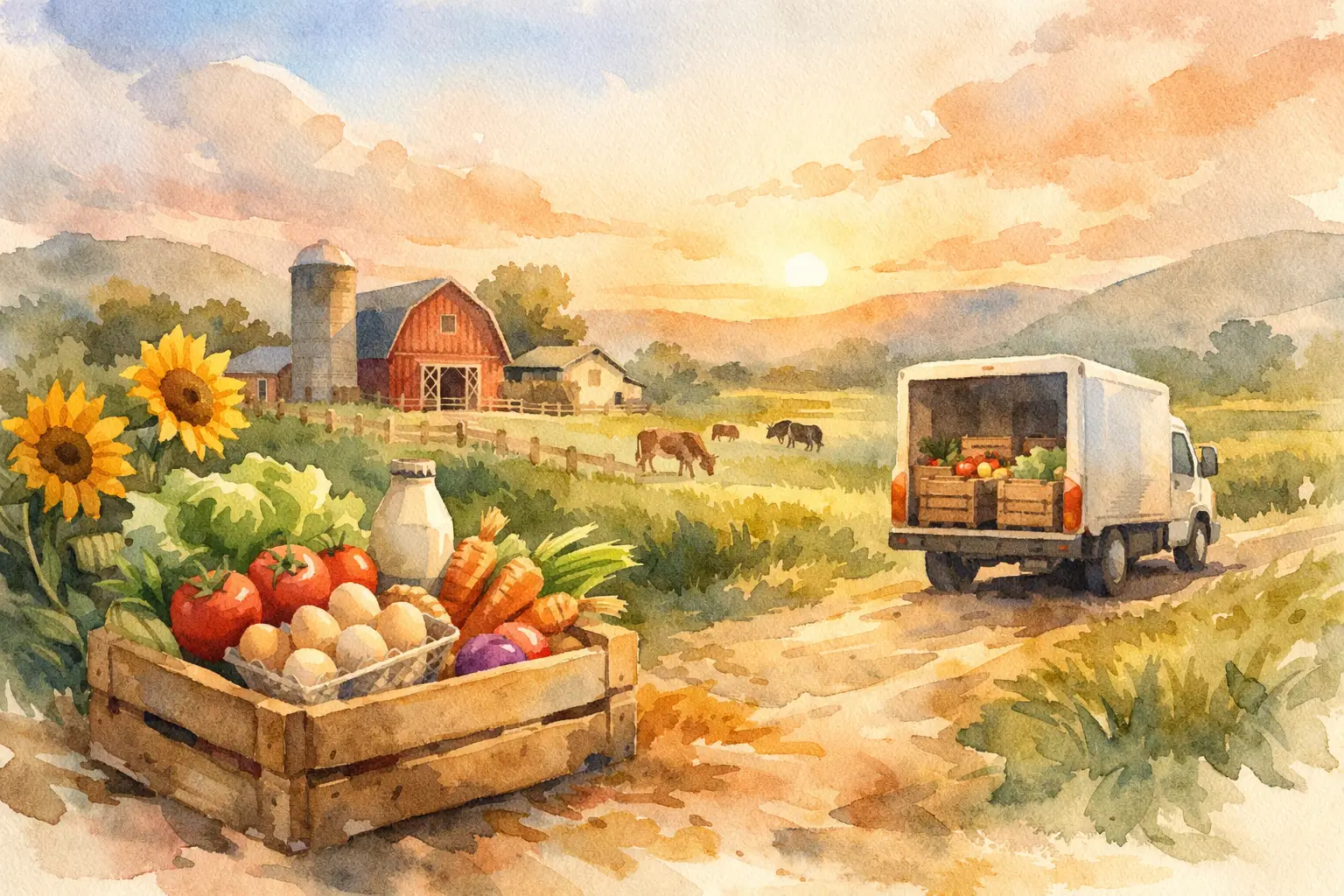
You can taste the difference when fruit hasn’t spent its best days in storage. That is the real promise of direct farm shipping – food that reaches your kitchen closer to the way it was meant to be enjoyed, with better freshness, more reliable quality, and a clearer story behind every box.
For families trying to eat well, that matters. When you buy produce through the usual retail chain, it often travels through growers, packing houses, distributors, warehouses, and store shelves before it reaches your counter. Every extra handoff adds time. And with fresh food, time changes everything – flavor, texture, ripeness, and how long it lasts once you bring it home.
What direct farm shipping really means
Direct farm shipping is exactly what it sounds like. Instead of produce moving through several middle steps before sale, a farm ships food directly to the customer. In the best cases, that means a shorter path from harvest to home and a better chance of receiving fruit at the right stage for real-life use.
That direct connection changes more than logistics. It gives families more confidence about where their food comes from, how it was grown, and who is behind it. You are not just buying an item off a shelf. You are choosing a source.
For many shoppers, that source matters as much as the product itself. They want food grown with care. They want to support American agriculture. They want to feed their households with ingredients that feel intentional, not anonymous.
Why freshness is the biggest advantage
Freshness is not a marketing phrase when it comes to produce. It affects how the fruit tastes on day one, how it ripens at home, and whether it becomes dinner or ends up wasted.
In a traditional system, produce may be harvested to survive a long chain of transport and shelf time. That approach makes sense for mass distribution, but it can mean compromises. Fruit may be picked earlier, handled more often, or held longer before purchase. By the time it gets to your kitchen, part of its prime is already behind it.
With direct farm shipping, the timeline is often tighter. That does not mean every farm works the same way, and it does not guarantee perfection every single time. Weather, seasonality, and transit conditions still matter. But in general, fewer stops give produce a better chance to arrive fresher and perform better at home.
That is especially true for avocados. Anyone who buys them regularly knows how frustrating inconsistency can be. One is hard for days, the next turns too quickly, and another looks fine outside but disappoints once sliced. When avocados are handled with care and shipped with freshness in mind, the eating experience becomes much more dependable.
Better flavor starts at the source
Families do not invest in premium produce just because it looks good in a box. They do it because they want food that tastes like it should.
Flavor begins in the grove or field, but shipping decisions affect it too. The closer the food stays to its natural harvest rhythm, the better chance it has to develop the texture and taste people remember. That rich, creamy avocado on toast. The clean bite in a fresh salad. The fruit that actually makes a simple meal feel satisfying.
This is one reason direct-to-consumer farm models continue to grow. People are tired of paying grocery prices for produce that feels average. They want quality they can notice, not just promises on a label.
For home cooks, better flavor has a practical payoff. Good ingredients make everyday meals easier. You do not need to cover up bland produce with heavy sauces or overcomplicate dinner to make it appealing. When the fruit is fresh and well grown, it does more of the work for you.
The trust factor families are looking for
There is also a human side to direct farm shipping that large retail systems cannot easily replicate. Buying straight from a farm creates a level of trust that many shoppers have been missing.
You know there are real people behind the product. You know someone has a reputation tied to what arrives at your door. That tends to produce a different standard of care. Family farms, in particular, often build their business around relationships, not just volume. They depend on repeat customers, word of mouth, and the belief that what they send out reflects their name.
That matters when you are feeding your family. Parents and household shoppers are making choices every week about nutrition, budget, and quality. They are not just looking for convenience. They are looking for confidence.
Direct farm shipping can offer that confidence because the food is not separated from its origin. The farm’s values stay attached to the product.
Supporting American farms with your grocery dollars
For many buyers, direct farm shipping is also a values decision. It gives people a way to support domestic growers more intentionally.
That does not mean every imported product is a poor choice, and it does not mean local or domestic is the only factor that counts. Sometimes price, availability, and season all shape what makes sense for a household. But when families have the option to buy directly from American farms, many see it as a meaningful investment.
They are supporting working land, agricultural knowledge passed from one generation to the next, and the people willing to keep growing food here at home. That kind of purchase carries a little more purpose. It turns grocery spending into a way of preserving something worth keeping.
At Holmes Grown USA, that belief is part of the mission – growing premium avocados with family pride and sending them from grove to table for households that care about freshness, nutrition, and where their food comes from.
Is direct farm shipping always the best choice?
Not always. The honest answer is that it depends on what you value most.
If your top priority is finding the lowest possible price at any given moment, store-bought produce may sometimes win. Large-scale retail can offer convenience and broad access, especially for shoppers who need everything in one trip. Some customers also prefer choosing each piece of fruit in person rather than ordering a farm-packed box.
But if your priorities are freshness, source transparency, flavor, and supporting family agriculture, direct farm shipping has real advantages. Many people are willing to pay a little more for produce that lasts longer, tastes better, and comes from a farm they trust.
There is also the question of seasonality. Direct-from-farm buying often follows nature more closely than grocery retail does. That means certain products may only be available at specific times. For shoppers used to endless year-round inventory, that can feel like a limitation. For others, it is part of the appeal. Seasonal availability reminds us that good food has a rhythm.
How to tell if a farm shipping program is worth trying
Not every direct farm shipping offer is equal, so a little discernment helps. Look for a farm that clearly explains its growing practices, harvest approach, and shipping expectations. Transparency is a good sign.
It also helps to pay attention to how the farm talks about ripeness and use. Produce should arrive with a purpose in mind, whether that means ready soon, ready now, or ready over several days. That kind of guidance shows that the farm understands how families actually cook and eat.
A strong farm program also tends to educate, not just sell. Recipes, storage tips, and seasonal updates tell you the business cares about your experience after delivery, not just the transaction itself.
And finally, trust your repeat experience. The best direct farm shipping relationships feel consistent over time. You learn the season, the product, and the pace. That familiarity turns ordering food into something more dependable and more personal.
Why this model fits the way many families want to eat now
More households are paying attention to ingredient quality, fewer processed foods, and meals made at home. That shift naturally leads people to ask better questions about produce. Where was it grown? How long has it been off the tree or vine? Why does one avocado taste buttery and fresh while another feels disappointing by comparison?
Direct farm shipping answers those questions with a simpler food path. Less mystery. More connection. Better odds of getting produce that supports healthy, enjoyable meals.
And perhaps that is the biggest reason this model resonates. It brings food back to something more grounded. A farm grows it. A family orders it. A meal is built around it. That may sound simple, but simple is powerful when it comes to feeding the people you love.
If you have ever wished your produce felt fresher, tasted better, and came with a little more meaning, buying directly from a farm is a worthwhile place to start.
Leave a Reply