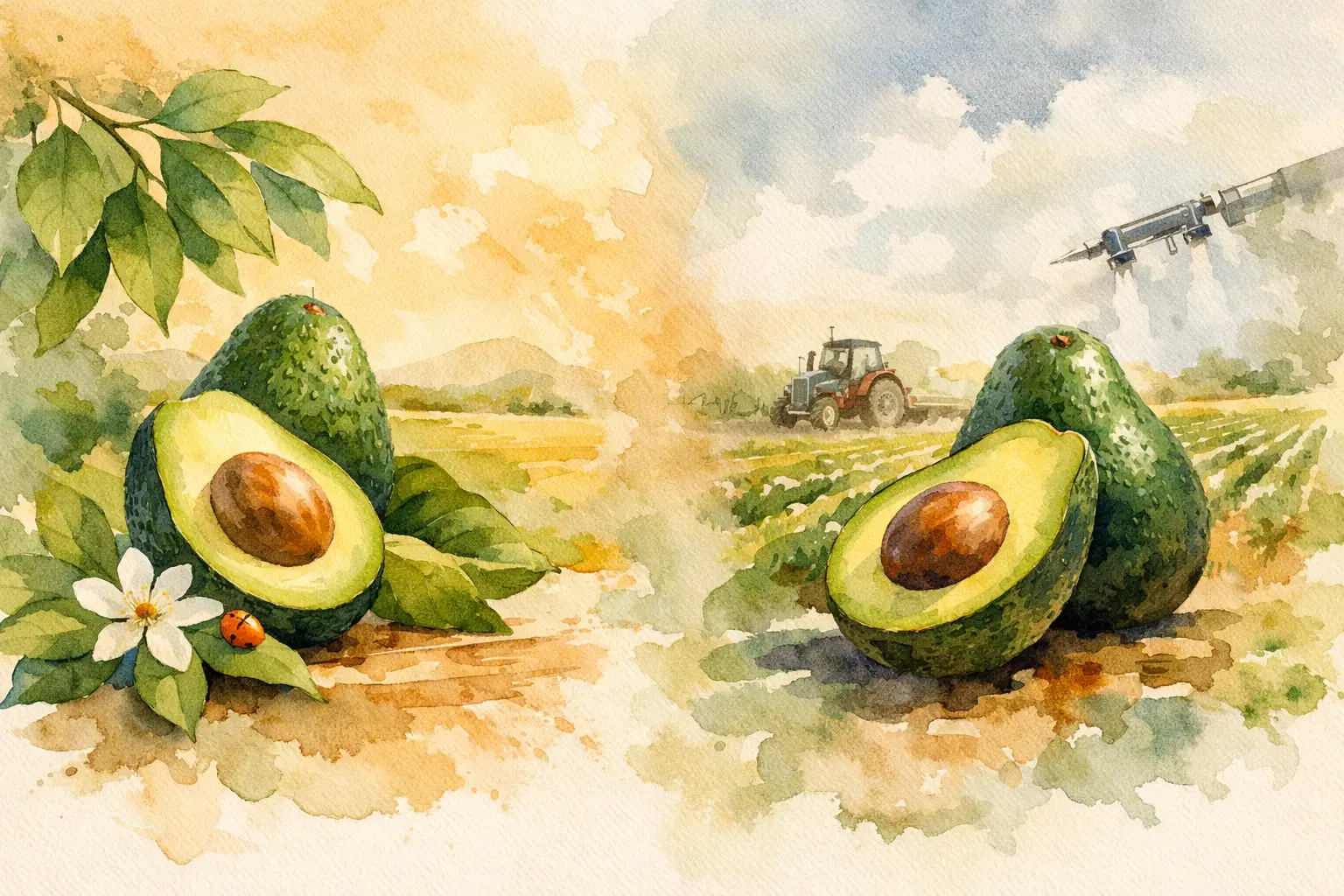
If you have ever stood in the produce aisle holding two avocados that look nearly identical, one labeled organic and the other conventional, you are not alone. The question around organic vs conventional avocados is less about hype and more about what matters most to your family – nutrition, farming practices, taste, price, and peace of mind.
For many shoppers, the honest answer is that both can have a place in a healthy kitchen. Avocados are one of those foods that already bring a lot to the table: healthy fats, fiber, potassium, and a creamy texture that works in everything from toast to tacos. The better question is not which one is universally “best,” but which one fits your values, your budget, and the kind of food experience you want at home.
Organic vs Conventional Avocados: What is the actual difference?
At the simplest level, the difference comes down to how the fruit is grown and how the farm is managed. Organic avocados are grown according to certified organic standards. That means growers follow rules about the types of fertilizers, pest controls, and weed management methods they can use. Conventional avocados are grown using standard agricultural practices, which may include synthetic pesticides or fertilizers approved for conventional farming.
That distinction matters to shoppers who care deeply about how their food is produced. Organic certification is not just a marketing word. It involves recordkeeping, inspections, and a set of standards farmers must meet over time. Conventional farming, on the other hand, is not automatically careless or lower quality. Many conventional growers are thoughtful stewards of their land and work hard to use water, soil amendments, and crop protection responsibly.
For families trying to make smart choices, it helps to remember that organic and conventional do not always mean wholesome versus unhealthy. In real life, farming is more nuanced than that. Good growers in both systems are balancing soil health, fruit quality, weather pressure, labor, and sustainability.
Does organic mean more nutritious?
This is where expectations and evidence do not always line up neatly. In terms of core nutrition, organic and conventional avocados are usually very similar. Both offer monounsaturated fats, fiber, folate, and other nutrients people reach for when they want satisfying whole foods.
Some studies across produce categories suggest there can be small differences in certain compounds depending on farming methods, soil conditions, and harvest timing. But for most households, those differences are not likely to matter as much as simply eating avocados regularly as part of a balanced diet.
What often matters more is freshness. An avocado picked at the right stage, handled carefully, and ripened well will usually give you a better eating experience than one that spent too long in transit or storage. From a family table perspective, quality is not just about the label. It is also about how the fruit was grown, harvested, packed, and delivered.
What about pesticide exposure?
This is one of the biggest reasons people choose organic. Avocados have a thick, protective peel, which changes the conversation a bit compared with fruits you eat skin and all. Because you remove the peel before eating, direct residue exposure on the edible portion is generally lower than it is for some other produce.
That does not mean the farming method is irrelevant. Many consumers choose organic not only because of what ends up on their plate, but because of concerns about farmworker exposure, environmental impact, and the broader agricultural system. Those are valid considerations, especially for shoppers who see food purchases as part of a bigger values-based decision.
At the same time, conventional avocados sold in the US still have to meet safety standards. If you wash the outside before cutting, store them properly, and buy from a trusted source, conventional avocados remain a nutritious and practical option for many homes.
Organic vs conventional avocados on taste and texture
Most people want a simple answer here, but taste is influenced by more than organic certification. Variety, climate, water, soil, harvest timing, and ripening conditions all affect flavor. One organic avocado can taste incredible, while another may be watery or bland. The same is true for conventional fruit.
If you have ever had a rich, buttery avocado with a clean nutty finish, chances are the grower and timing had as much to do with that experience as the label did. Freshness often wins. Fruit that moves quickly from grove to kitchen generally has a better shot at excellent texture and flavor.
That is one reason so many families start paying closer attention to source. They want more than a category. They want consistency. They want to know the avocados on the counter will be ready for guacamole on Saturday and sliced for salads on Monday.
Why organic avocados usually cost more
The higher price of organic avocados is not random. Organic farming often involves more labor-intensive weed control, stricter input options, certification costs, and added recordkeeping. Yields can also be lower in some conditions, depending on pest pressure and farm management.
For the shopper, that premium can feel worth it if organic growing aligns with personal values. But if the extra cost means buying fewer fresh foods overall, conventional avocados may be the more realistic and beneficial choice.
That trade-off deserves honesty. Feeding a family well is not about winning a purity contest at the store. It is about making thoughtful choices again and again. If conventional avocados fit the budget and help your household eat more whole foods, that is a meaningful win.
Which choice is better for sustainability?
This depends on what kind of sustainability you care about most. Organic farming can reduce reliance on certain synthetic inputs and support practices that many consumers associate with healthier ecosystems. That matters. But sustainability is bigger than one label.
Water use, soil stewardship, packaging, shipping distance, food waste, and how fruit is handled after harvest all play a role. An avocado grown with care closer to home and delivered efficiently may support your values in ways a simple organic label does not fully capture.
For many American families, source transparency is becoming just as important as certification. Knowing who grew the fruit, how it was handled, and whether the farm is invested in long-term land stewardship can tell you a lot. A family farm that takes pride in growing healthy food for other families may offer a kind of confidence that goes beyond produce aisle shorthand.
How to choose the right avocados for your kitchen
If your top priority is certified growing standards, organic may be the clear choice. If your top priority is affordability and everyday nutrition, conventional can still be an excellent option. If flavor, freshness, and ripening consistency matter most, pay close attention to source and handling.
A few practical cues can help no matter which type you buy. Look for avocados with intact skin and no major soft spots. If you need them for later in the week, choose firmer fruit. If you want them soon, look for slight give near the stem end. And once they reach the right ripeness, moving them to the refrigerator can buy you a little extra time.
It also helps to think about how you actually use avocados. For a quick weekday lunch, a dependable conventional avocado may do the job perfectly. For shoppers who prioritize organic choices across their home, organic avocados fit naturally into that lifestyle. And for people who care about flavor and freshness above all, buying from a trusted grower can make the biggest difference of all.
The choice is personal, but quality should never be an afterthought
There is no need to turn organic vs conventional avocados into an all-or-nothing debate. Both can support a healthy lifestyle. Both can belong in a kitchen that values real food, family meals, and intentional buying.
What matters is being clear on what you are paying for. Sometimes that is certification. Sometimes it is convenience. Sometimes it is confidence in the grower, the harvest, and the eating experience. At Holmes Grown USA, we believe families deserve avocados that deliver on freshness, flavor, and trust – because when food comes from people who care deeply about the land and the table, you can taste the difference.
The best avocado choice is the one that helps you feed your family well, feel good about the purchase, and enjoy every slice while it is perfectly ripe.
Leave a Reply